Home / Start here / Battery Platforms
Outside Industrial · Buying guide
Cordless Battery Platforms, Explained
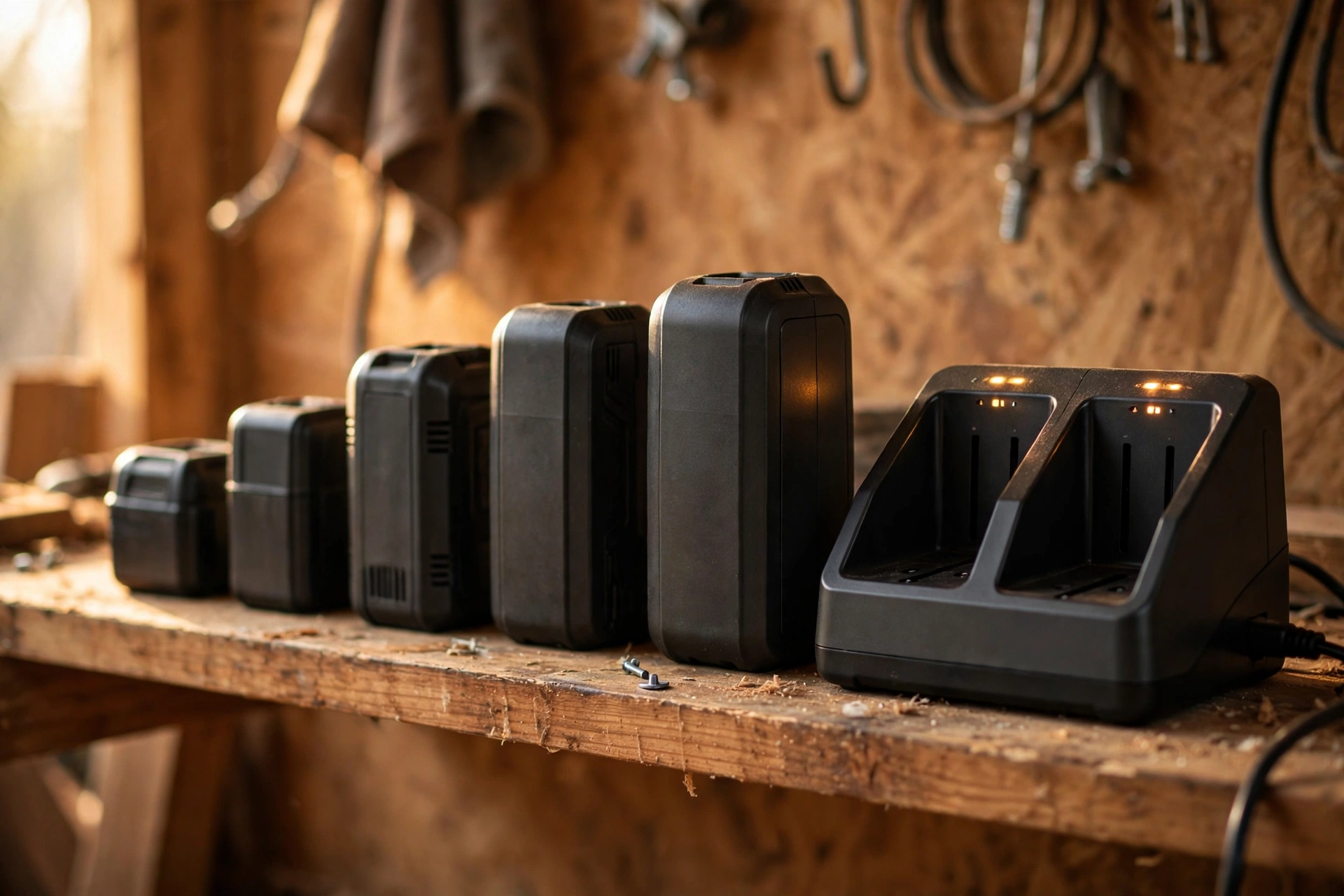
Here’s the thing nobody tells beginners: you’re not buying a drill. You’re buying into a battery system — and that system quietly decides what your whole workshop looks like in five years.
Some links are affiliate links — we may earn a commission at no extra cost to you. Read the disclosure.
The core idea
One brand’s batteries running a dozen tools is where cordless gets affordable: every “bare tool” you add costs less because you already own the power source. The trade-off is lock-in — batteries are brand-specific, so switching platforms later means starting the battery collection over. That’s why this decision deserves more thought than any single tool purchase.
How to choose, before you commit
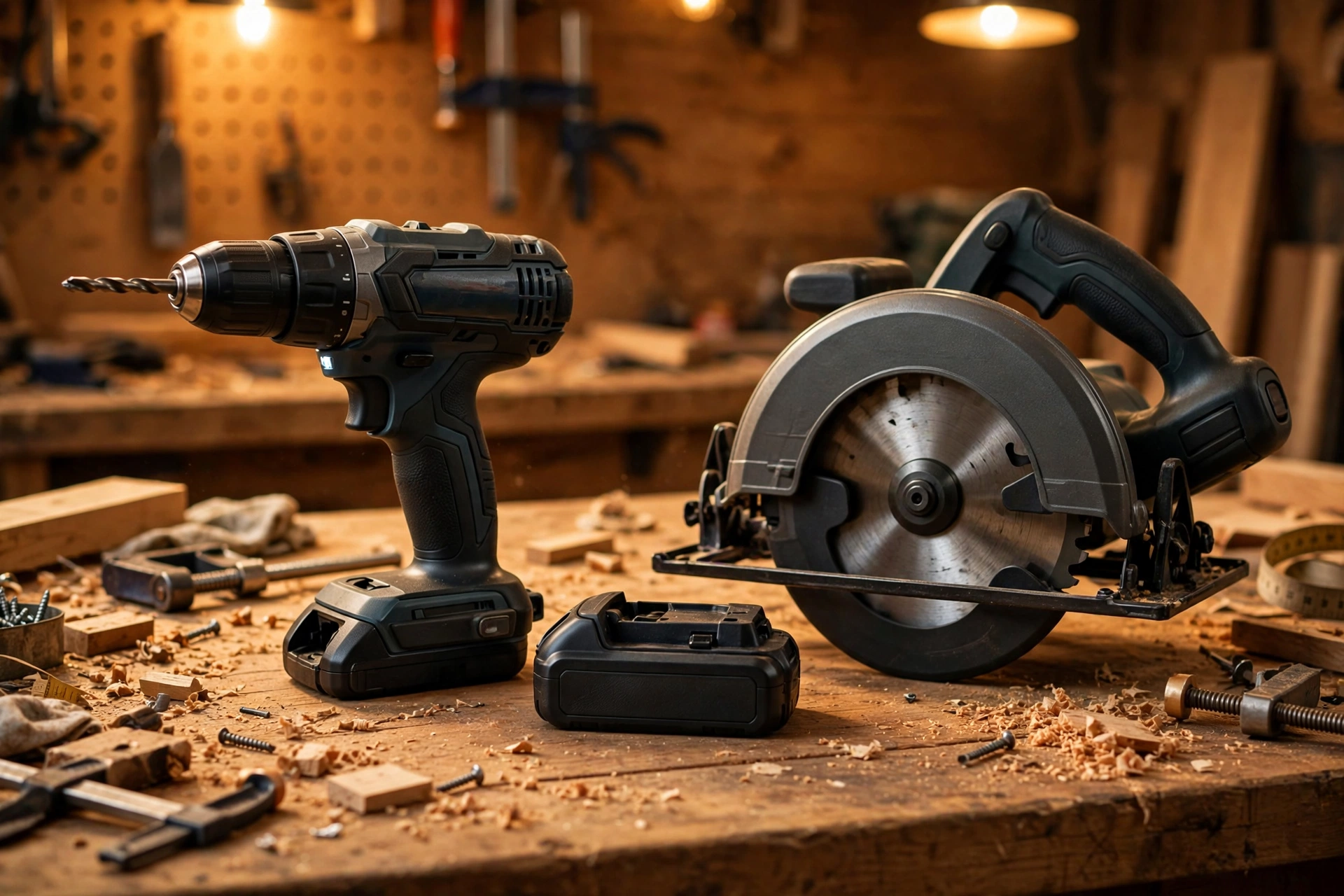
- Count the tools, not the hype. Look at the platform’s lineup and count how many tools you’d actually want in the next few years. A deep bench in categories you’ll never touch doesn’t help you.
- Match the voltage class to the work. Compact 12V-class tools are light and handy for overhead and tight spots; 18V/20V-class is the workhorse range for most shop and jobsite tasks; higher-voltage lines exist for the hungriest tools. Bigger isn’t better — right-sized is.
- Read the battery story. How many amp-hour options exist? Are there compact batteries for light work and big ones for runtime? A platform with one battery size is a platform with a ceiling.
- Check the boring stuff. Warranty terms, service centers, parts availability, and whether the brand has a history of supporting older tools. Specs fade; support is forever.
The well-known platforms, in plain terms
The major ecosystems — DeWalt’s 20V Max, Milwaukee’s M12 and M18, Makita’s LXT and XGT lines, Ryobi’s One+ — all make capable tools. The honest differences are ecosystem depth, pro vs. homeowner focus, and price tier. There’s no universal winner; there’s the platform whose lineup and pricing match your work. (No partnerships here — these are examples, not endorsements.)
Charging and storage
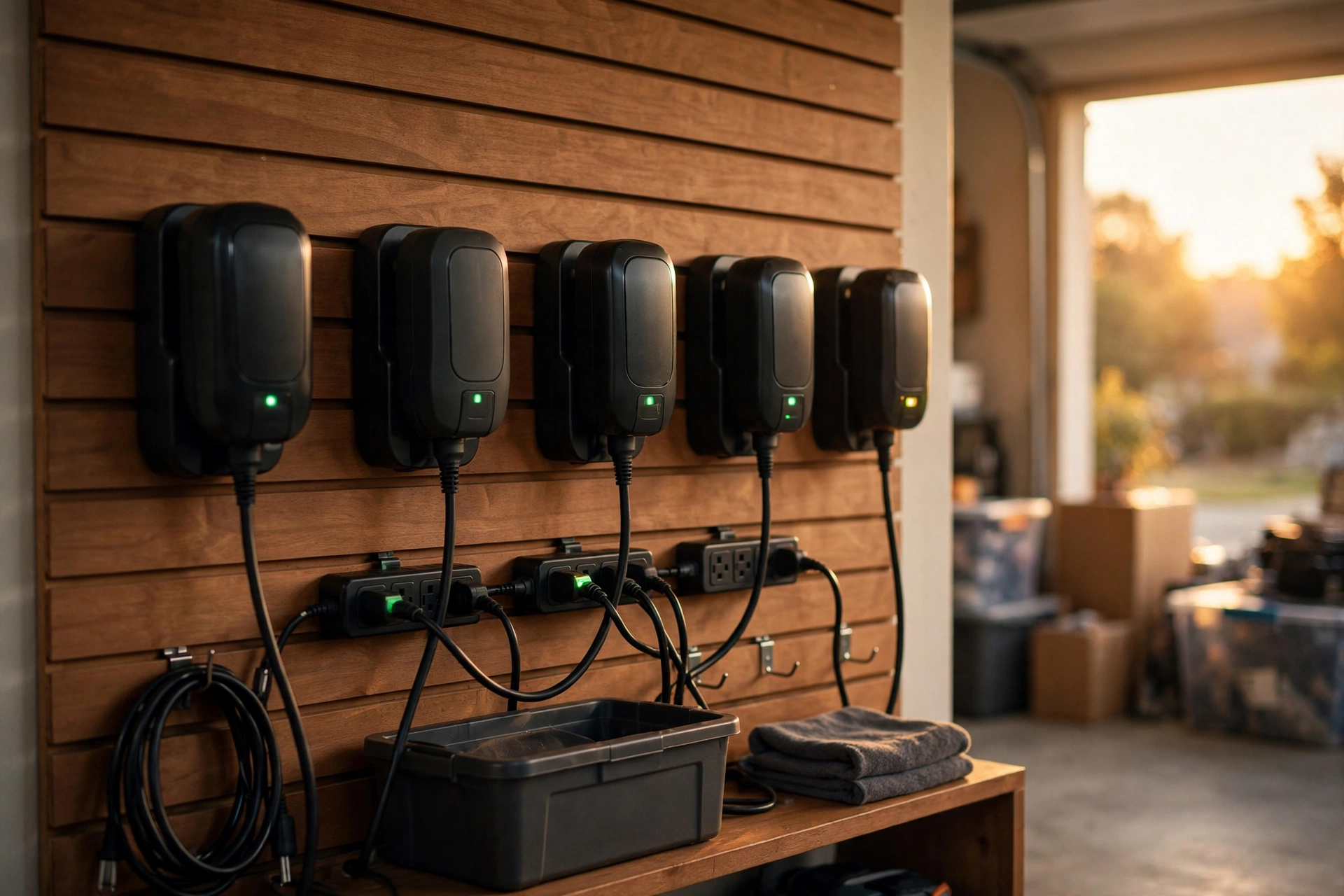
Batteries last longest when they’re not cooked, frozen, or left dead for months. A simple wall charging station keeps them organized, off the floor, and topped up — and it’s one of the cheapest organization upgrades in the shop. Store them indoors, charge before they’re fully drained when you can, and let hot batteries cool before charging.
Good to know
Can I use another brand’s batteries with adapters?
Third-party adapters exist, but they can affect performance, bypass tool protection features, and void warranty coverage. Check the manufacturer’s terms before going that route — for most people, staying native to one platform is the safer play.
Should a homeowner buy into a pro platform?
Not automatically. Pro platforms cost more per tool; homeowner-focused lines cover most household and DIY work at a lower price. Buy the platform that matches the work you actually do, not the work you imagine.
How many batteries do I really need?
Two is the practical minimum for most people: one in the tool, one on the charger. Add more as you add tools — or when you’re regularly waiting on a charge.
Why don’t you list prices?
Prices change constantly, and we’d rather not show you a number we can’t stand behind. Check the retailer for today’s price and availability.